Sunday, January 6, 2013

कला, भाषा, मीडिया और दर्शन की दुनिया के साथ वार्ता


24 फरवरी 2013 की लोकविद्या ताना-बाना की मुंबई बैठक की तैयारी में 


 सूचना और  वैश्वीकरण के  इस नए युग में परिवर्तन की शक्तियां आपस में जुड़ सकें ऐसे स्थानों की फिर से पहचान करना और ऐसे नए स्थानों को गढ़ना ज़रूरी हो गया है। लोकविद्या ताना -बाना की एक ऐसे ही स्थान के रूप में पहचान की गयी है। लोकविद्या ताना-बाना उन लोगों के आपसी सम्बन्ध और संपर्क का ताना-बाना है जो लोकविद्या के बल पर अपनी ज़िन्दगी चलाते हैं तथा औरों के रहने, खाने और पहनने का इंतजाम भी करते हैं। नीचे कला, भाषा, मीडिया और दर्शन की दुनिया में लोकविद्या ताना-बाना पर बातचीत का एक प्रारंभिक सन्दर्भ तैयार किया जा रहा है, वह तर्क पेश करने का प्रयास है जिसके चलते यह देखा जा सके कि लोकविद्या ताना-बाना उन बहसों, गतिविधियों और रचनाओं का स्थान हो सकता है जो हमें एक नए दर्शन और परिवर्तन की राजनीति की ओर ले जायें। 

लोकविद्या      

दो दशकों से दुनिया नए चमत्कारिक घटनाक्रमों और बर्बादी के नए पैमानों के बीच घिसट रही है। कम्प्यूटर, बायो और नैनो की नयी प्रौद्योगिकियाँ विकसित हुई हैं, इन्टरनेट बना है, आर्थिकी, राजनीति, शिक्षा, स्वास्थ्य ... सभी का वैश्वीकरण हुआ है। अमेरिकी युद्धों के नए अवतार सामने आये हैं और पूरी दुनिया में, राज्य के समर्थन से, नए उद्योगों और बाज़ार ने जैसे कि लोगों को उजाड़ने का बीड़ा उठा रखा है। इस सबके विरोध में उठने वाले नए जन-आंदोलनों में लोगों के विचार करने और सोचने के तरीकों की शिरकत बढ़ी है। यानि नयी दुनिया के इस निर्माण में जहाँ एक ओर किसानों और आदिवासियों को बड़े पैमाने पर विस्थापित किया जा रहा है वहीँ दूसरी ओर उनके द्वारा अपने ज्ञान और अपने तौर-तरीकों पर बने रह कर अपनी दुनिया को बनाने का आग्रह बढ़ता जा रहा है। लोकविद्या उस मज़बूत खम्भे के रूप में उभर रही है जिसके इर्द-गिर्द दुनिया भर के विविध समुदाय एक नयी बुनियादी एकता हासिल कर सकते हैं। लोकविद्या पर वार्ताओं के सन्दर्भ के लिए देखें परिशिष्ट-1. 

सत्ता के तौर-तरीकों और जन-आन्दोलन, दोनों में ही इतना नया इतनी तेज़ी से हो रहा है कि 20वीं सदी के सिद्धांत लगातार पीछे छूटते चले जा रहे हैं और नयी परिकल्पनाओं के लिए मैदान खाली होता चला जा रहा है।   लोकविद्या को एक बार फिर ज्ञान और विचार के एक महान स्थान एवं स्रोत के रूप में पहचान मिल रही है।

ज्ञान की दुनिया में परिवर्तन 

परिवर्तन के इस दौर में साइंस की परम स्थिति टूट गयी है। और अब ज्ञान के जायज होने या समाज में सम्मान पाने के लिए वैज्ञानिक तरीकों का हवाला ज़रूरी नहीं रह गया है। ज्ञान की दुनिया का अभूतपूर्व विस्तार हो रहा है, जिसका एक आधार ज्ञान की लोक परम्पराओं द्वारा फिर से अर्जित सम्मान में है, समाज में मौजूद ज्ञान, यानि लोकविद्या, की प्रतिष्ठा में है। मनुष्य की सक्रियता की वे अभिव्यक्तियाँ जो साइंस की हुकूमत से हमेशा बाहर रहीं, जैसे कला, भाषा, मीडिया और दर्शन के क्षेत्रों की ज्ञान की गतिविधियाँ, अब अपने खुद के बूते पर ज्ञान की गतिविधियाँ मानी जा रही हैं।  ज्ञान की दुनिया में हो रहे वर्तमान परिवर्तन के लिए देखें परिशिष्ट-2. 

लोकविद्या ताना-बाना 

लोकविद्या ताना-बाना को वह स्थान बनना है जहाँ परिवर्तन के विचार और गतिविधियाँ स्वाभाविक तौर पर आपस में और एक दूसरे के संपर्क में आते हैं तथा अंतरक्रियाओं में उतरते हैं। इसे एक ऐसे सामाजिक स्थान के रूप में विकसित किया जाना चाहिए जहाँ कलाकर्मियों की गतिविधियाँ, लोकविद्याधर समाज के संचार, संघर्ष और संगठन के तौर-तरीके और न्याय के लिए संघर्षरत सभी व्यक्ति, समूह एवं संगठन स्वाभाविक तौर पर एक दूसरे  के साथ संपर्क में आते हैं। इसे इन सबके नए प्रयोगों का स्थान बनना है। एक लोकविद्या ताना-बाना समाज में अस्तित्व रखता है किन्तु यह अपनी वर्तमान अवस्था में उपरोक्त भूमिका निभा पाने की स्थिति में नहीं है। उसे इस भूमिका के लायक बनाने में कला,भाषा,मीडिया और दर्शन के क्षेत्रों से सक्रिय पहल की ज़रुरत है। वर्णन, कथन, सम्प्रेषण, संचार, अभिव्यक्ति और रचना के उन नए रूपों को गढ़ने की ज़रुरत है जो लोकविद्या ताना-बाना को राजनीतिक अर्थ प्रदान करें और बुनियादी परिवर्तन की दृष्टि से एक महत्वपूर्ण स्थान बनाने में अपनी भूमिका निभाएं। 
लोकविद्या ताना-बाना को संस्थागत स्थान नहीं बनना है। जिस तरह लोकविद्या समाज में रहती है, उसीतरह लोकविद्या ताना-बाना भी समाज में ही रहना चाहिए, उसे समाज के एक अंग के रूप में ही विकसित  होना चाहिए। 

---------


परिशिष्ट-1

लोकविद्या संवाद और अभियान 

लोकविद्या का विचार अब लगभग दो दशकों से बहस में है। 1990 के दशक में हुए पारंपरिक विज्ञान एवं प्रौद्योगिकी के महाधिवेशनों, आई आई टी मुंबई 1993, अन्ना यूनिवर्सिटी, चेन्नई 1995, गाँधी विद्या संस्थान, वाराणसी, 1998,  ने लोक ज्ञान के बढ़ते महत्व की ओर ध्यान आकर्षित किया, यहाँ तक कि वाराणसी महाधिवेशन का नाम लोकविद्या महाधिवेशन रखा गया। लोकविद्या के आर्थिक, राजनैतिक पक्षों पर लेख लिखे गए हैं, उन्हें विभिन्न कार्यशालाओं और विचार गोष्ठियों में प्रस्तुत किया गया है और प्रकाशित भी किया गया है। 'समाज में ज्ञान पर वार्ता' के नाम से विभिन्न विश्व सामाजिक मंचों ( हैदराबाद सितम्बर  2003, मुंबई जनवरी 2004, कराची मार्च 2006, दिल्ली नवम्बर 2006, नैरोबी जनवरी 2007) में कार्यशालाएं आयोजित की गयीं और इन अवसरों पर अंग्रेजी में बुलेटिनें छापी गयीं। विश्वविद्यालयों में पढ़े-लिखे लोगों से लेकर किसानों, आदिवासियों और कारीगरों के स्थानों पर लोकविद्या पर वार्ताएं आयोजित की गयी हैं। विश्वविद्यालयों और शोध संस्थानों के निमंत्रण पर वर्ष 2004 से 2012 के बीच दिल्ली, इलाहाबाद, कोलकाता, जयपुर,  इंदौर, मुंबई, हैदराबाद , बंगलुरु और चेन्नई में लोकविद्या पर व्याख्यान दिए गए हैं।  वर्ष 2012 में लोकविद्या जन आन्दोलन  के अधिवेशन, वाराणसी ( उ प्र ), दरभंगा (बिहार), सिंगरौली और इंदौर (म प्र ) तथा चिराला  (आन्ध्र प्रदेश), में आयोजित किये जा चुके हैं। लोकविद्या, ज्ञान और राजनीति के विषयों पर तथा विस्थापन, बाज़ार और ज्ञान के दर्शन पर लोकविद्या दृष्टिकोण से पुस्तिकाएं प्रकाशित की गयी हैं। पुस्तिकाएं अंग्रेजी व हिंदी दोनों में हैं। लोकविद्या संवाद और लोकविद्या पंचायत के नाम से 1998 से 2012 के बीच पत्रिकाएँ प्रकाशित की गयी हैं। विद्या आश्रम के सदस्य इन्टरनेट पर अंतरराष्ट्रीय बहस में भाग लेते हैं।  लोकविद्या जन आन्दोलन के नाम से एक ब्लॉग lokavidyajanandolan.blogspot.com चलाया जाता है। विद्या आश्रम की वेब साईट www.vidyaashram.org पर लोकविद्या विचार और कार्य से सम्बंधित अधिकांश जानकारी व प्रकाशन उपलब्ध हैं।  

----------

परिशिष्ट-2

ज्ञान की दुनिया में हो रहा वर्तमान परिवर्तन 

( 20वीं से 21वीं सदी )

  1. औद्योगिक युग में ज्ञान की दुनिया में बड़ी ऊँच-नीच थी। साइंस शीर्ष पर बैठा हुआ था और उसके बाद आते थे जीव विज्ञान, समाज विज्ञान, भाषा, कला आदि लगभग इसी क्रम में। अब यह श्रेणीबद्धता टूट गयी है। कोई नया सब पर हावी ऐसा क्रम अभी बना नहीं है। 
  2. 19वीं  और 20वीं सदी की दुनिया में साइंस के अलावा ज्ञान की अन्य परम्पराओं और व्यवस्थाओं को कोई सम्मान नहीं था। उन्हें ज्ञान का दर्जा ही हासिल नहीं था। अब स्थिति बदली है। लोगों के पास जो ज्ञान है उसे पहचाना जा रहा है। इसलिए भी लोकविद्या का विचार और उससे जुडी पहल एक नया विश्वास जागृत करने की स्थिति में आ रहे हैं। 
  3. व्यापार की दुनिया में और एक विद्यागत गतिविधि के रूप में मीडिया, कला, डिजाईन और भाषा अब साइंस की बराबरी करते दिखाई दे रहे हैं। 
  4. नए किस्म के विज्ञान सामने आ रहे हैं। इनमें प्रमुख हैं सूचना विज्ञान, ज्ञान का प्रबंधन व मन का विज्ञान।
  5. जब साइंस का दबदबा था तब उसी का सोचने का तरीका सभी ज्ञान की गतिविधियों में लागू किया जाता था , जैसे भाषा के अध्ययन, कला-समीक्षा, संस्कृति और परम्पराओं के मूल्यांकन, समाजशास्त्र, यहाँ तक कि दर्शन में भी। पर अब ऐसा नहीं होता। लोकविद्या, कला, भाषा, मीडिया, पूरब के दर्शन, मन का विज्ञान, जीव विज्ञान और सूचना का विज्ञान जैसे स्थानों से सोचने के अलग तरीकें सामने आ रहे हैं। 
  6. आधुनिक दुनिया ने विश्वविद्यालय को ज्ञान का एकमात्र केंद्र बना कर रखा था। लेकिन अब विश्वविद्यालय की यह इजारेदारी टूट रही है। इन्टरनेट पर और व्यापक समाज में ज्ञान की गतिविधियों (लोकविद्या) को नयी पहचान मिली है।
  7. कौन-सा ज्ञान जायज़ माना जाये और कौन नहीं, यह तय करने की कसौटी अब वैज्ञानिक तरीके में नहीं मानी जाती। मनुष्य समाज और प्रकृति के प्रति संवेदना और ज्ञान का संगठन और भण्डारण योग्य होना, ये दो बातें स्वतंत्र रूप से नए मानकों के रूप में उभरी हैं। 
  8. प्रौद्योगिकी के क्षेत्र में बड़े और शक्ति (पावर ) आधारित उद्योग का महत्व घटा है। और अधिकांश अनुसन्धान सूचना, नैनो, और बायो टेक्नोलॉजी के क्षेत्र में हो रहा है। 
  9. ज्ञान की दुनिया पर के राष्ट्रीय नियंत्रण कमज़ोर हो रहे हैं और उनका स्थान एक तरफ अंतरराष्ट्रीय वित्तीय और कारपोरेट  ताकतें और दूसरी ओर सामाजिक आन्दोलन ले रहे हैं। 
  10. सामाजिक और तकनीकी दोनों ही क्षेत्रों में लोकविद्या आन्दोलन, फ्री एंड ओपन सॉफ्टवेयर मूवमेंट, क्षेत्रीय भाषाओँ और कला का उभार ये नए ज्ञान आन्दोलन हैं। प्रकृति और धरती माँ  के अधिकार के आन्दोलन अंतरराष्ट्रीय पटल पर एक नयी लोकसम्मत ज्ञान की राजनीति का उद्घाटन कर रहे हैं। 
ज्ञान की दुनिया की साइंस रूपी बुनियाद कुछ यों हिल गयी है कि शोषित और तिरस्कृत वर्गों के लिए अपने उद्धार के ऐतिहासिक मौके तैयार हो रहे हैं। अब की बार पहल उन लोगों से आ सकती है, और आनी भी चाहिए, जिनकी संवेदना मनुष्य और प्रकृति के साथ है और जिन्हें उनकी गतिविधियों के साथ फिर से ज्ञान की दुनिया में जगह मिलना शुरू हुई है। 

विद्या आश्रम 
----------


Wednesday, January 2, 2013

लोकविद्या आश्रम, बभनपुरा , वाराणसी - उद्घाटन


28 दिसम्बर 2012 को वाराणसी में गंगा नदी के किनारे के गाँव बभनपुरा में एक लोकविद्या आश्रम की शुरुआत की गयी। यह विद्या आश्रम के सक्रिय कार्यकर्ता दिलीप कुमार 'दिली' का गाँव है और वाराणसी शहर से लगभग 10 किलोमीटर दूर है।
कार्यक्रम का उद्घाटन कबीर के भजनों से किया गया--' नर तू ज्ञान बिना पछ्तैबा ...' रमाशंकर बाबा केशव, राधेश्याम और दिलीप कुमार ने ये भजन गाये। दिलीप जी ने लोकविद्या आश्रम के मूल्यों को सबके सामने रखा। उन्होने तीन प्रमुख बातें कहीं-

  • लोकजीवन में रमता ज्ञान दर्शन लोकविद्या है। 
  • लोकविद्या के स्वामी किसान, कारीगर, आदिवासी, महिलाएं, छोटे-छोटे दुकानदार ये ही असली ज्ञानी हैं। 
  • पाखंड, दमन, गैर-बराबरी, मनुष्य के हाथों मनुष्य की लूट, इन सबके खिलाफ अलख जगाने का स्थान लोकविद्या आश्रम है। 
कई लोगों ने अपने वक्तव्यों में लोकविद्या की वास्तविकता और ताकत की ओर ध्यान आकर्षित किया। यह भी कहा गया कि लोकविद्या में जीवन का आधार है और व्यवस्था का आधार विश्वविद्यालय की विद्या में, तथा यह कि इस विसंगति को दूर करना और लोकविद्या में व्यवस्था का आधार बनाना यही एक नया समाज बनाने का रास्ता है। इस दिशा में एक महत्त्वपूर्ण कदम के रूप में कहा गया कि लोकविद्या के बल पर सबको पक्की आय की व्यवस्था होनी चाहिए, उन्हें सरकारी कर्मचारी के बराबर नियमित वेतन मिलना चाहिए। 
बोलने वालों में प्रमुख रहे बभनपुरा के शिवप्रसाद, जयप्रकाश, राकेश, सलारपुर के लक्षमण प्रसाद, बरईपुर  की राधा देवी, पीलीकोठी के एहसान अली, चिंतन ढाबा सारनाथ के कृष्ण कुमार व विद्या आश्रम सारनाथ की प्रेमलता सिंह और सुनील सहस्रबुद्धे। रमचंदीपुर  के बबलू कुमार ने सभा का सञ्चालन किया। चार-पांच गाँवों से कुल 60 लोगों ने भाग लिया। 


यह लोकविद्या आश्रम गाँव वासियों के सहयोग से बनाया गया है। गाँव के लोगों ने चावल, दाल, सब्जी का सहयोग किया जिससे खिचड़ी बनायीं गयी और सभी लोगों को प्रसाद के रूप में दी गयी। 

दिलीप जी ने घोषणा की कि हर महीने पूर्णिमा के दिन लोकविद्या आश्रम पर लोकविद्या सत्संग का आयोजन रहेगा, यहाँ से गाँव- गाँव में लोकविद्या का सन्देश पहुँचाया जायेगा तथा आश्रम पर बच्चों के लिए लोकविद्या शिक्षा की व्यवस्थाएं की जाएँगी। 

बबलू कुमार 

Tuesday, December 11, 2012

The Proposed Mumbai Dialogue On Lokavidya Tana-bana


Background note for discussion on 24th Feb 2013 in Mumbai

Dialogue with the World of Art, Media & Philosophy

In this new age of information and globalization, it has become imperative that available spaces are recognized afresh and new ones created, where the agencies of change can connect with one another. Lokavidya tana-bana is suggested to be such a space. Lokavidya tana-bana refers to the web of relationships and connectivity among the people, a horizontal web so to say.  This note is to develop the focus for a dialogue on lokavidya tana-bana with activists from the world of art, media, philosophy and social movements. The brief set of paragraphs below are written to argue for and press for the importance of lokavidya tana-bana as the space or location critically significant for debates in the course of development of  a new philosophy and polity of change in the unfolding world.

Lokavidya: For almost two decades now we are in an era characterized by the new sciences (info, bio, nano and cognitive), internet, globalizing policies and frameworks in practically every area - economics, politics, education..., the new American wars and a veritable war on the people across nations by the new industry and the market assisted by the new state. The new movements of opposition to these phenomena and tendencies are growingly relying more on people’s knowledge and ways of thinking, lokavidya. The making of the new world is observing at one end sweeping displacement and uprooting of the peasants and the adivasis and at another their assertion based on their own knowledge and ways. Lokavidya seems to provide that anchor around which a fresh unity of the diverse peoples of the world can assume emancipating dimensions. See Annexure-1 for reference to discussions on lokavidya.

The pace of change as well as the newness, both in forms of control and in people’s opposition, practically outstrips theory, leaving large spaces open for fresh imaginations. Received theories are at bay and the knowledge activity of the people, lokavidya,  is preparing again to be the great source of ideas for a new and desirable world.

Transition in the world of knowledge: One great thing that is happening with all this is coming down of science from the absolute position it occupied earlier and the scientific method no more being honored  as the criterion of legitimization of knowledge. An almost unprecedented enlargement of the world of knowledge is taking place, and this among other things is due to the recognition now of people's traditions of knowledge as valid traditions, granting epistemic dignity to knowledge in society. Such knowledge is generally referred to as lokavidya. Art, media, language and philosophy, namely areas of great and creative human activity, particularly areas of knowledge activity which have always been beyond the dictat of science, are being seen as areas of knowledge activity in their own right. See Annexure-2 for the present transition in the world of knowledge.

Lokavidya Tana-bana & radical change
Lokavidya Tana-bana is expected to become that location where the ideas and activities for change in society naturally connect and interact with one another. It is to be developed as a location where artistic activity, forms of communication, struggles & organizations of the lokavidyadhar samaj and also all individuals, groups and organizations engaged in struggles for justice connect with one another and also engage in new experiments. There is a lokavidya tana-bana in society, which in the form in which it exists is unable to serve the purpose being discussed here. And it is precisely here that art and media can play a truly transformative role by developing those new forms of representation, expression, articulation, communication such that lokavidya tana-bana assumes political significance.

Lokavidya Tana-Bana is not to become an institutional space. Just as lokavidya resides in society, similarly, lokavidya tana-bana too ought to reside in society and develop as a limb of the same.


·                 


Annexure-1

Lokavidya Dialogues and Campaign

The idea of lokavidya has been in debate for about two decades now. The Congresses of Traditional Sciences and Technologies of India held in 1993 (IIT Bombay), 1995 (Anna University, Chennai) and 1998 ( Gandhian Institute of Studies, Varanasi) drew attention to the growing importance of people's knowledge, so much so that the Varanasi Congress was named Lokavidya Mahadhiveshan. There are articles written, presented in various workshops and also published on economic, philosophical and political aspects of lokavidya. Journals have been published with the titles Lokavidya Samvad and Lokavidya Panchayat. There have been workshops on Dialogues on Knowledge in Society in various World Social Forums (Hyderabad, Mumbai, Delhi, Karachi, Nairobi). Dialogues on lokavidya have been conducted across the social spectrum, from among the university educated to the locations of peasants, adivasis and artisans. There have been conferences of Lokavidya Jan Andolan in Varanasi (UP), Darbhanga (Bihar), Singrauli (MP) and Chirala (AP). There are blogs conducting online dialogues and the protagonists of lokavidya actively participate in some international lists. The Vidya Ashram website www.vidyaashram.org puts together the whole gamut of ideas and practice centered on lokavidya.

·     


Annexure-2

Transition in the World of Knowledge 
At the Turn of the Century ( 20th to 21st)

  •  Whereas earlier there was an oppressive hierarchy with physical sciences at the top and  life sciences, social sciences, language, art and so on following in that order, now this order stands greatly disturbed, no steady order any more commands respect and value. 
  •   Whereas earlier other knowledge systems and traditions hardly had a place in the world of knowledge modeled by science, now there is recognition as knowledge to people’s traditions of knowledge, particularly lokavidya.
  • Science and technology now have competition from media, art, design and language both as genuine knowledge activity and in the world of commerce.
  • New sciences are emerging, namely information science, science of knowledge management, cognitive science.
  • In the previous age the paradigms of physical science infested all knowledge activity, e.g. studies of language, society, art-criticism and even philosophy, but no more so. New paradigms from people’s knowledge, art, media, Eastern philosophies, life sciences and information sciences are making their way felt.
  • The place of knowledge activity is shifting from the university to the virtual domain or internet on the one hand and on the other to society (witness the increasing recognition to innovation).
  • The criteria of legitimacy of knowledge are changing from the scientific method to on the one hand organizability by the new technology/software and on the other human concerns.
  • The technology front has moved from the power based industrial technologies to radically new areas, namely, info, nano and bio technologies.
  • National controls of the world of knowledge have given way in a large measure to international financial and corporate controls.
  • Movements for the assertion of people’s knowledge in both social and technical areas, the free and open software movement, rise of regional languages and the arts including design, media, and cinema are the new knowledge movements.

    
     Something very basic has changed in the world of knowledge pointing to an opportunity hitherto not known to the marginalized and the oppressed of the modern world. The initiative this time can and must come from those who have a human concern and who with their activity have been re-instituted in the world of knowledge.

·     


 Vidya Ashram

Sunday, December 2, 2012

मुंबई बैठकें : 23-24 फरवरी 2013

विद्या आश्रम की मुंबई बैठकें 
23-24 फरवरी 2013
बायो मेडिकल एथिक्स सेण्टर, सेंट पायस कालेज, आरे रोड, गोरेगांव (पूर्व)


विद्या आश्रम साल में एक बड़ी बैठक करता है जिसमें सैद्धांतिक और कार्यक्रम सम्बंधित बातें होती हैं। इस साल यह बैठक 23-24 फरवरी को मुंबई में हो रही है।  बैठक में मुख्य रूप से विद्या आश्रम के सहकर्मी, लोकविद्या जन आन्दोलन की संयोजन और सलाहकार समितियों के सदस्य तथा मुंबई के सामाजिक कार्यकर्ता व ऐसी रूचि के कलाकार शामिल होंगे। इस ब्लाग को भी निमंत्रण माना जाये। जो भी आना चाहते हों, हमें खबर करें। रहने-खाने और बैठक की व्यवस्था एक ही जगह पर है।

इस वर्ष की बैठक में निम्नलिखित विषय रखे गए हैं।
  1. लोकविद्या जन आन्दोलन 
  2. लोकविद्या आश्रम 
  3. लोकविद्या ताना-बाना  
  4. लोकविद्या दर्शन 
  5. शोध व अनुवाद 
  6. भाईचारा विद्यालय 
  7. प्रकाशन व इन्टरनेट 
इन सभी विषयों पर तैयारी का पर्चा, हिंदी व अंग्रेजी दोनों में, विद्या आश्रम की  वेब साईट पर देखा जा सकता है।

लोकविद्या जन आन्दोलन में पिछले एक साल में उत्तर प्रदेश, बिहार, मध्यप्रदेश और आंध्र प्रदेश में पहल ली गयी है। अब आगे की योजना बनानी है जिसके प्रस्ताव क्रमशः वाराणसी, दरभंगा, सिंगरौली, इंदौर, और हैदराबाद से दिए जायेंगे। इन पर चर्चा व फैसले लोकविद्या जन आन्दोलन की संयोजन समिति करेगी। 
सिंगरौली, वाराणसी और इंदौर में लोकविद्या आश्रम शुरू हो गए हैं। अनूपपुर  और दरभंगा में  जल्दी ही शुरू होने की उम्मीद है। 
लोकविद्या ताना-बाना पर  बहस एक साल से हो रही है। इस बैठक में इसे बनाने की शुरुआत करनी है। बैठक में इस विषय के लिए 24 फरवरी का पूरा दिन रखा गया है। 
लोकविद्या दर्शन पर व्यापक बहस संगठित करने  को एक कार्य के रूप में लेने की बात है। 
शोध व अनुवाद के जरिये लोकविद्या का सामाजिक व आर्थिक पक्ष मज़बूत करना तथा इन कार्यों के मार्फ़त पैसा जुटाना, दोनों की ही ज़रूरत है। 
ज्ञान के विभिन्न प्रकार शिक्षा की दुनिया में शामिल होने से उन सब लोगों को शिक्षा से बहुत कुछ मिलने लगेगा जो आज वहां से कुछ नहीं पा रहे हैं। इस दृष्टि से भाईचारा विद्यालय चलाये जाते रहे हैं। आगे की योजना बननी  है। 
बात फ़ैलाने के लिए , स्पष्ट वक्तव्य के लिए और बहस के लिए पुस्तिकाओं व पत्रिकाओं के प्रकाशन किये जाते रहे हैं। इन्टरनेट पर वेब साईट और ब्लाग आदि का माध्यम अपनाया गया है। इनके संयोजन पर आगे की बात होनी है। 
हमें आशा है की इस बैठक से विद्या आश्रम अपने अगले चरण में प्रवेश करेगा जिसकी तैयारी लोकविद्या जन आन्दोलन की शुरुआत से ही चल रही है।

विद्या आश्रम 
वाराणसी 


Wednesday, October 3, 2012

LJA Conference, Madhya Pradesh, Singrauli 28-30 Sept. 2012

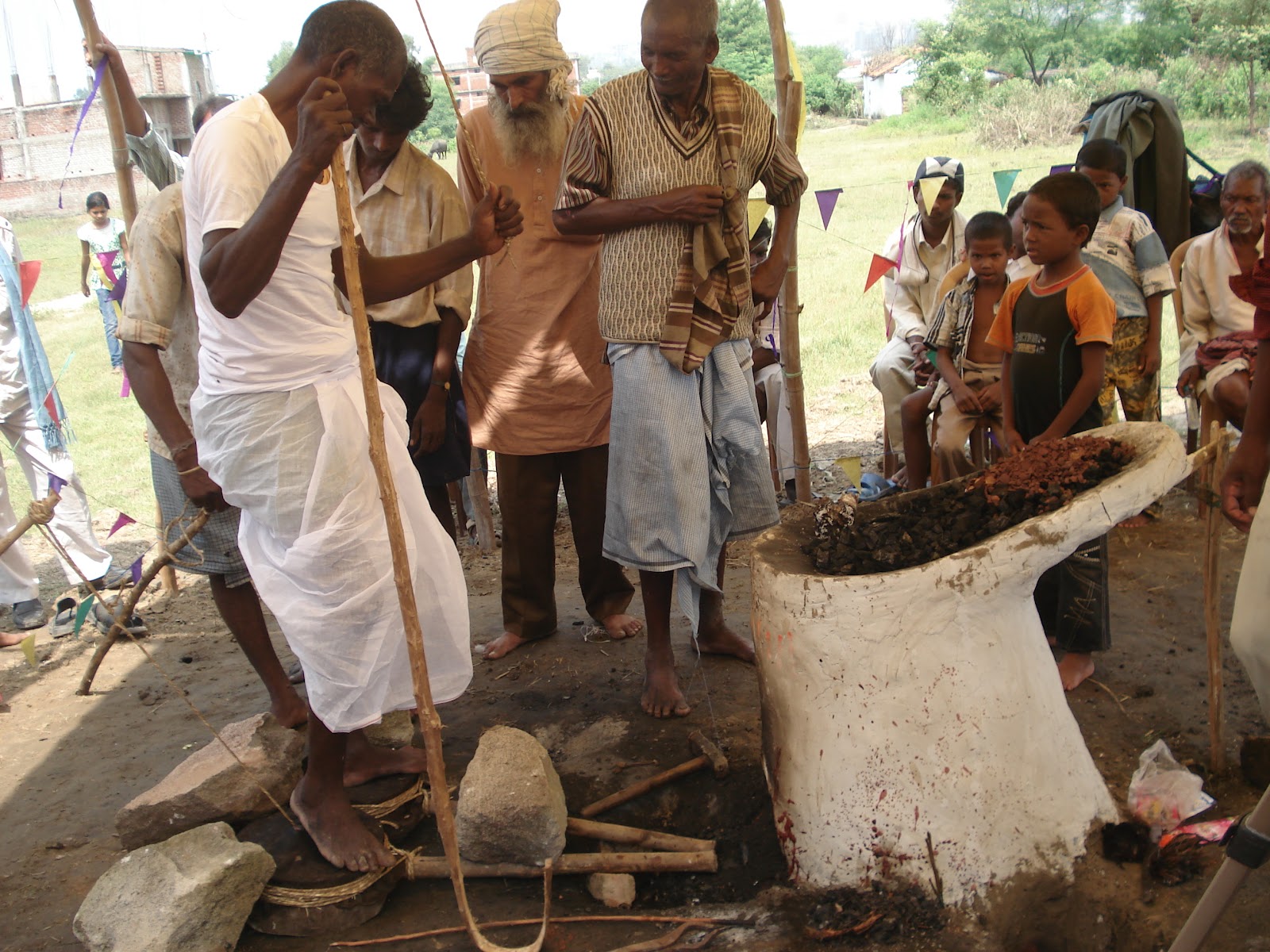
On 28 Sept. an Agaria Panchayat was held at the Lokavidya Ashram, Singrauli. An Iron Smelting demonstration was also organized. The Agaria group responsible both for demonstration and the Panchayat had come from the adjacent district of Balrampur in Chhattiagarh. More than 100 Agarias gathered in this Panchayat made the following resolutions :
  • To spread  their Iron Smelting technology such that the knowledge basis of their life becomes vibrant again.
  • To organize an Agaria Maha Panchayat with participation of Agarias from different states, namely  Chhattisgarh, Jharkhand, Bihar, Uttar Pradesh and Madhya Pradesh.
  • To work towards raising a demand for the development and implementation of an Agaria Project to pull them out from the low levels of life that they have been pushed into. 
 
Iron smelting demonstration 28 Sept. 2012

Agaria Panchayat, 28 Sept. 2012

Agaria Panchayat, 28 Sept. 2012


On 29th Sept. the Lokavidya Jan Andolan Conference was held at the Workers Community Hall in the Jayant Coal Mine Campus. Other than local participation there were groups from Indore, Satna, Shahdol, Varanasi, Darbhanga and Hyderabad. More than 100 participants debated through the day the following three issues (stated below in the form of resolutions proposed at the end of the day).  
  • Jobs for everybody on the basis of Lokavidya. Salaries  not  to be less than that of  government employees. 
  • Distribution of power to have precedence over production. All expansion of power production to be stopped until a just distribution policy is made and implemented. 
  • Displacement is not acceptable. Project affected areas to get compensation equal to the project cost.

Madhya Pradesh LJA Conference in Singrauli , 29 Sept. 2012

 Lokavidya Jan Andolan rally 29 Sept. 2012

On 30th Sept. some 40 of us met at Lokavidya Ashram at Dhoti, Baidhan from 10.00 am to 1.00 pm. Everybody's opinion was taken on the three resolutions proposed ( mentioned above) on the previous day. The resolutions were adopted unanimously.


Meeting at Lokavidya Ashram, Singrauli on 30th Sept. 2012


Vidya Ashram